
Photonics—The World’s Invisible Engine
Angie Kellen, Director, Client Services, Open Sky Communications
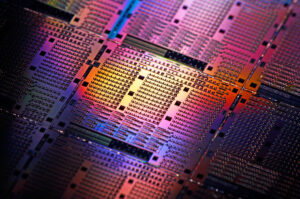
Silicon Photonics @ Intel. Source: Intel
Twenty-plus years in the semiconductor industry lends itself to an interesting perspective. You get to watch the “next big things” arrive with a lot of noise and then disappear. Sometimes, you’re bombarded with the roar of media coverage for the latest hot technology, such as artificial intelligence (AI). As everyone scrambles to integrate it into everything, we are inundated daily with updates and AI’s evolution into new applications, which are fascinating and terrifying, all at the same time. You also get to watch other technologies arrive quietly, almost politely, and become so deeply embedded in modern life that we stop noticing them altogether. This is how I view photonics. Photonics is the science and technology of generating, manipulating, and utilizing light (photons) for various applications. I will cover how photonics has crept out from the research labs “on little cat feet” to quietly become a foundational part of how we live and work.
When I first started working in this space, photonics felt like something that mainly existed in research labs and conference presentations. It was highly technical, really impressive, but not always tied to everyday life in a way people could instantly recognize. Now, after years of working alongside clients who design, build, and scale manufacturing equipment for photonic integrated circuits (PICs), I see it differently. Photonics isn’t “the future,” it’s already the present. It’s in our data centers, our hospitals, our cars, our power systems, and increasingly, in our pockets.
And what’s been especially fascinating to watch is not just the photonics devices themselves, but the behind-the-scenes manufacturing innovations that make them possible. I’ve worked with companies that build advanced wafer bonding and patterning systems and ultra-precise metrology tools – equipment that helps align, inspect, and validate photonic structures at microscopic scales where even the smallest imperfections can cause big performance losses. I won’t name names here, but if you know the photonics ecosystem, you already know how essential these manufacturing platforms are. They are the “quiet enablers” behind the breakthroughs.
Photonics started in various areas of specialized optics. Today, it has become a foundational layer of modern technology, similar to electricity or microelectronics. And what makes it so powerful is that it doesn’t just do one thing well. Incredibly, photonics improves many parts of our world at once.
Communications: the high-speed data highways we now depend on

Optical fibers that make up fiber-optic cables. Source: Envato
If you want to understand why photonics matters, start with communications. This is where photonics has already transformed our lives so thoroughly that we barely remember what came before. Fiber optics has enabled more effective communication systems.
The internet, cloud computing, streaming video, remote work, AI models, real-time gaming, and even the ability to instantly share huge files across the globe all rely on moving data quickly and efficiently. Electrical signals can only go so far before they hit bottlenecks from heat, resistance, and bandwidth limitations. Light doesn’t have those same constraints. Photonics gives us the ability to move information at enormous speeds with minimal loss.
This isn’t just about faster Wi-Fi or better Zoom calls. It’s about the entire digital backbone of society. In data centers, optical interconnects are increasingly necessary to keep up with the sheer volume of data being processed. And in high-performance-computing environments, photonics is helping reduce latency and power consumption, which are two of the biggest pain points as systems scale.
If you want an explanation of how fiber optics and photonics enable modern communications, check out this article from The University of Rochester.
From where I sit, what’s most exciting isn’t just that photonics is already powering our networks, it’s that we’re still early in the scaling curve. Silicon photonics is pushing the field into a manufacturing-friendly era, where optical components can be built using processes closer to what the semiconductor industry already knows. For example, I have worked with companies that provide ultra-precise ion beam and plasma processing tools that enable cleaner surfaces, tighter feature control, and higher-performance optical structures during manufacturing and packaging. As these advanced processes are integrated, manufacturing momentum gains more speed and adoption accelerates.
Healthcare: diagnosing and treating disease with unparalleled clarity
There are some areas where technology feels impressive, and then there are areas where it feels deeply human. Healthcare is one of those places where photonics doesn’t just advance innovation, it advances dignity.
Light-based imaging has reshaped diagnostics in ways that would have sounded like science fiction when I entered this industry. Optical coherence tomography (OCT), for example, allows doctors to see cross-sectional images of tissue with extraordinary detail. It’s widely used in ophthalmology, but its impact extends into cardiology, dermatology, and other specialties. Photonics also enables endoscopic imaging systems that give surgeons real-time visibility inside the body with increasing precision.
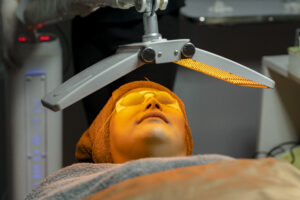
Bio-light therapy. Source: Envato
But it’s not only imaging. Photonics is also central to treatment. Laser-based surgeries, photodynamic therapies, and light-assisted precision procedures have become standard in many clinical settings. And as biomedical devices continue shrinking, photonics is becoming a key enabler of minimally invasive tools that reduce trauma and recovery time for patients. I am personally grateful for photonics in providing minimally invasive surgery that is more precise and dramatically speeds the recovery time due to a smaller incision. I recovered from a procedure in two weeks that would have taken six weeks using older technology. Thank you, photonics!
If you want to learn more about OCT and why it matters, read this article at the National Library of Medicine.
One thing I’ve learned from working in semiconductors for decades is that “better” isn’t always the right metric. In healthcare, what matters is accuracy, reliability, repeatability, and safety. Photonics delivers on all of those. And as manufacturing improves, healthcare photonics will become even more widespread and affordable.
Mobility: sensing the world for safer autonomous systems
Mobility is where photonics starts to feel like it’s protecting us in real time. The move toward advanced driver assistance systems (ADAS) and autonomous driving isn’t just about convenience. It’s about reducing accidents, improving reaction times, and giving vehicles better awareness than humans can maintain continuously. Photonics-based sensing, especially LiDAR, plays a key role in that.
LiDAR uses light pulses to map the environment, creating detailed 3D models of roads, objects, and movement. When paired with cameras, radar, and AI, it helps vehicles understand not just what’s around them, but how that environment is changing by the second.
And this is where I’ve seen the photonics manufacturing challenge up close. It’s not hard to build a LiDAR system in a lab. It’s hard to build it at scale, at automotive cost targets, and with reliability that survives heat, vibration, and weather for years. That’s where advanced packaging, wafer-level processes, and high-precision metrology become critical.
A helpful resource on LiDAR and how it works can be found in this article from Neon Science.
When I think about mobility, I also think about what’s next, such as photonics-enabled sensing for drones, robotics, smart traffic systems, and industrial automation. It’s not just vehicles that need to “see”; increasingly, it’s machines that need to “see.”
Energy and infrastructure: monitoring and managing grids with precision
Energy is one of the most underestimated photonics stories, partly because it doesn’t come with flashy consumer products. But the more I learn about it, the more I think this is one of photonics’ most important long-term contributions.
Modern power grids are becoming more complex. We’re integrating renewable sources that fluctuate, adding electric vehicle charging loads, and trying to improve our resilience against power outages. To manage that complexity, we need better sensing and better real-time data.
Photonics contributes in a few ways. Fiber optic sensors can detect strain, temperature, vibration, and other parameters across long distances. That means utilities can monitor transmission lines, pipelines, and critical infrastructure with higher sensitivity and lower maintenance than many traditional sensor systems. Distributed fiber optic sensing (DFOS) is a particularly exciting area, because it essentially turns a fiber cable into a long, continuous sensor.
To learn more about DFOS, read this interesting article by Geocomp.
Photonics also plays a role in industrial monitoring where it is used for early detection of equipment faults, tracking equipment health, and preventing failures. And in a world where downtime can be costly or dangerous, early detection is everything.
It’s in this arena where we see the “quiet” nature of photonics. A better smartphone camera is visible. A safer grid is invisible, that is, until it isn’t. Photonics is increasingly part of the reason infrastructure works smoothly in the background.
Consumer technologies: from wearables to smart devices
Consumer tech is where photonics becomes personal in a different way because it’s literally in the objects we touch every day.
If you’ve ever used facial recognition software to unlock your phone or computer, you’ve interacted with photonics. If you’ve ever worn a smartwatch that measures heart rate or blood oxygen, photonics is part of that measurement system. If you’ve used a modern smartphone camera with advanced autofocus and depth sensing, photonics is helping capture that information.
Wearables are a particularly interesting area. Photoplethysmography (PPG), the optical technique used to measure pulse and blood oxygenation, is now standard in many devices. The technology is straightforward where light enters the skin and sensors detect changes in reflection caused by blood flow. It’s one of those examples where photonics feels almost magical, but it’s precision engineered.
If you want to learn more, here’s an explanation on PPG in this article in MDPI.

Source: Oakley Meta
Consumer photonics is also expanding through augmented reality (AR) and virtual reality (VR). Display technologies, optical waveguides, and micro-optics are pushing AR devices toward smaller, lighter, more wearable form factors. The closer AR gets to everyday glasses, the more photonics becomes central to the user experience. Oakley Meta has the most advanced performance AI glasses that I have seen, and it integrates many of the elements of AR..
And here again, manufacturing matters. AR waveguides, microLED integration, and advanced optical packaging all require incredibly precise process control. Over the years, I’ve watched the industry learn (sometimes painfully) that you can’t scale photonics the same way you scale traditional electronics without rethinking alignment, patterning, bonding, and inspection.
Behind-the-scenes: why manufacturing is the real photonics accelerator
Photonics is not just about inventing new devices. It’s about making them manufacturable.
This is the part of the story that rarely makes it into mainstream discussions, but it’s the part I’ve lived most closely through my work. The photonics industry has brilliant device engineers. It also has a growing need for manufacturing tools that can meet semiconductor-level expectations for yield, repeatability, and throughput.
Over the years, I’ve worked alongside clients whose technologies address some of the most critical steps in photonics manufacturing. The more I work in this space, the more I believe the biggest photonics breakthroughs over the next decade will be manufacturing breakthroughs, with better processes, tools, and scalability.
Why photonics feels different after two decades in semiconductors
After two decades in semiconductors, I’ve learned to be cautious about hype. The industry loves buzzwords like “revolutionary” and “game changing.” Sometimes those words are justified, but often they’re marketing shorthand for “we’re still figuring it out.”
Photonics is different. It has already changed the world, and it continues to do so in ways that are both subtle and profound. It’s not just one product category. It’s an enabling layer across communications, medicine, mobility, energy, and consumer technology. Photonics is not a trend, rather it’s an infrastructure.
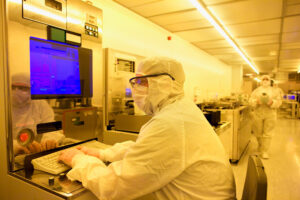
Cleanroom, semiconductor manufacturing. Source: Envato
And most importantly, it’s one of the rare technology areas where the benefit isn’t just speed or convenience. It’s safety, health, resilience, and connection.
After reading this information, it’s not hard to imagine how many people use photonics daily without knowing it. How many lives have been improved or protected by light-based technologies that quietly do their work behind the scenes. Photonics makes me feel hopeful, because it suggests something important, that the best or most effective technologies aren’t always the ones that shout the loudest. Sometimes they’re the ones that simply become part of the world, improving it in steady, measurable ways.
Photonics started in optics labs. Today it lives in the infrastructure of modern life. And as manufacturing catches up with innovation, as advanced bonding, precision metrology, and scalable integration become more mature, photonics will move even faster into the places that we need it most.
After watching wave after wave of technologies come and go, and seeing how AI can sometimes make people feel less human, it’s very rewarding to work in photonics. It is a field that’s grounded in the real world and, in many ways, helps us hold onto our humanity.

Source: Envato
If light can carry our data, help diagnose disease, make roads safer, stabilize energy systems, and power the devices we rely on every day, then photonics isn’t just a technology story. It’s a story about enabling our humanity so we can take care of each other, one beam of light at a time.